

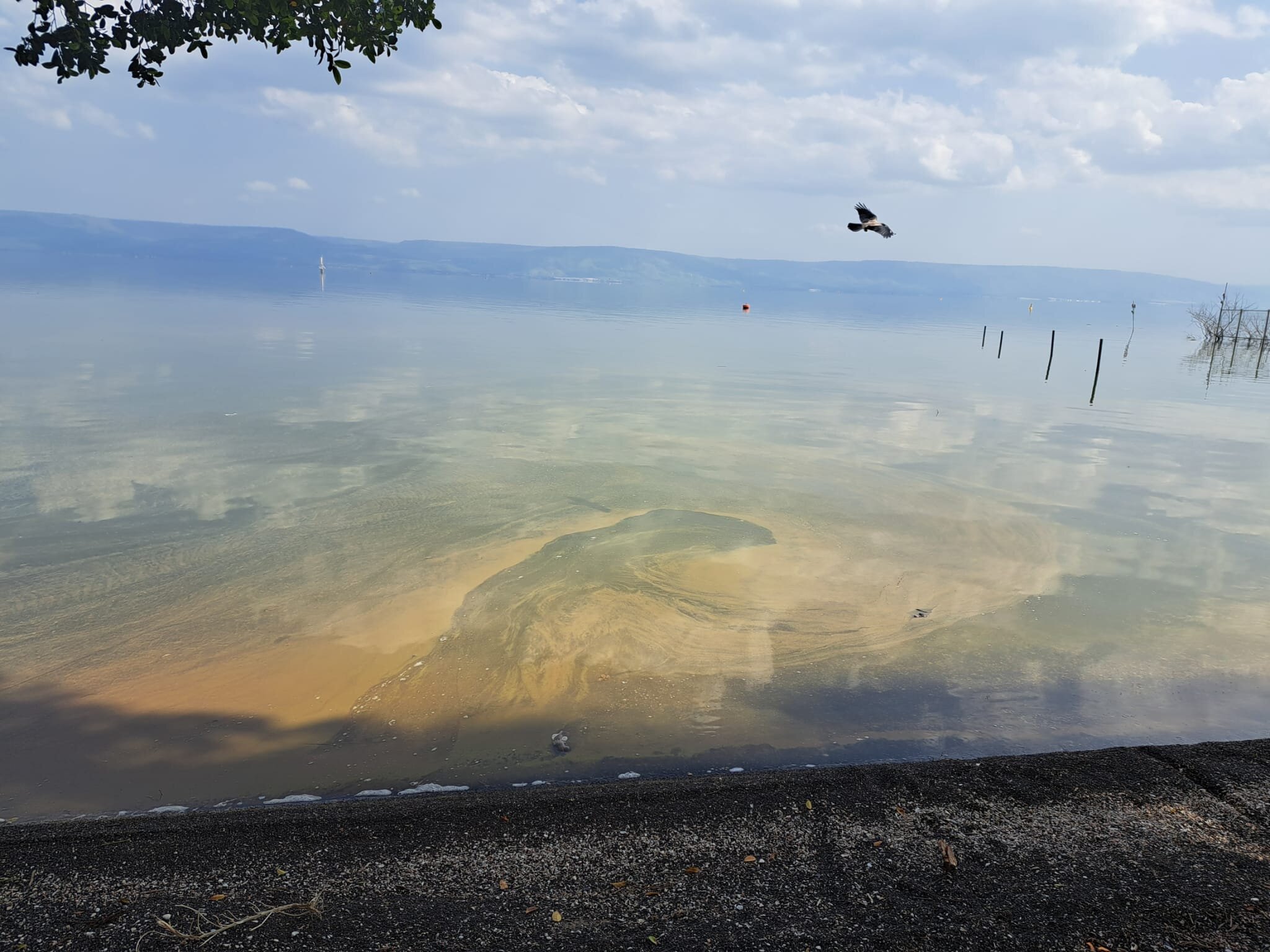
A new study challenges a long-standing assumption about how cyanobacteria survive environmental stress. The study, led by researchers at the Israel Oceanographic and Limnological Research (IOLR)—the Kinneret Limnological Institute (KLI), shows that survival under prolonged heat stress is not determined solely by the ability to protect photosynthesis. Instead, survival may depend on a remarkable shift in cellular energy balance, with dark respiration compensating when photosynthetic electron transport becomes impaired.
Microcystis aeruginosa is a toxic cyanobacterium that forms harmful algal blooms, affecting water quality, ecosystem health, recreation, fisheries and drinking-water resources worldwide. Globally, Microcystis blooms are usually associated with warm-water conditions and are expected to intensify as climate change drives rising temperatures. In Lake Kinneret (Sea of Galilee), however, the local strain of Microcystis shows an unusual seasonal pattern.

Published in Science Advances, the study compared two strains of Microcystis aeruginosa, a toxic cyanobacterium that forms harmful algal blooms in freshwater ecosystems worldwide. One strain originated from Lake Kinneret, where Microcystis displays unusual behavior: It repeatedly blooms during late winter, under relatively cool water temperatures. This local strain was compared with the frequently studied strain PCC7806.
To examine possible explanations for this phenomenon, the researchers used a unique experimental approach. First, they induced heat stress using an extreme temperature increase of 20 C (68 F), an approach commonly used in photosynthesis research but uncommon in ecological studies. Second, they waited 48 hours after inducing heat stress to assess how each strain responded and attempted to survive the heat shock.
In other words, they were examining how the cells regulated their energy budget—through photosynthesis and respiration—following severe heat stress.
Under light conditions, a pump-and-probe spectrophotometer tracked how electrons moved in the Microcystis cell through different parts of the photosynthetic machinery. Under dark conditions, a gas-exchange mass spectrometer measured how much oxygen the cells consumed through respiration.
Together, these measurements allowed the researchers to see not only that photosynthesis was disrupted, but where the disruption appeared in the electron flow, and whether respiration changed in response to heat stress.
"What we saw was remarkable," says Dr. Oded Liran, lead author of the study.
"The local strain from the Kinneret used all its energy to keep photosynthesis working until exhaustion and cell-density loss. It means that the local strain evolved and rewired all its abilities to maintain photosynthetic activity until it basically suffocated itself.
"On the other hand, the frequently studied model strain decreased its photosynthetic process and focused on respiration, which is breathing, and eventually survival. These findings suggest that cyanobacteria survive heat stress through a broader energy-management strategy than previously appreciated.
"Rather than simply protecting photosynthesis, the more heat-tolerant strain appears to survive by increasing respiration when photosynthesis is weakened. In these cells, photosynthesis and respiration are closely connected, so respiration may help keep the cell functioning when heat disrupts photosynthesis."
One of the study's most unexpected findings was that the more heat-tolerant strain did not survive by maintaining superior Photosystem II (PSII) performance, a central component of photosynthesis often used as an indicator of stress tolerance.
Instead, the researchers found that survival was associated with enhanced respiratory activity that helped compensate for heat-related disruptions in photosynthetic electron transport. This suggests that respiration may play a much larger role in heat resilience than previously recognized.
The researchers found that the heat-tolerant strain did not survive by keeping photosynthesis highly active. Instead, photosynthesis slowed, while respiration increased. Because photosynthesis and respiration are closely connected in cyanobacteria, this increase in respiration may help support the cell's energy needs when heat weakens photosynthesis.
"The strength of this work is that we combined an extreme heat-shock experiment with an integrated view of photosynthesis and respiration," said Dr. Liran.
"Under milder conditions, this compensatory mechanism may have remained hidden. By pushing the cells to their physiological limit, we could see that the heat-tolerant strain was not simply protecting photosynthesis, but increasing respiration as part of its survival response."
The findings have broader significance in the context of climate change. Rising temperatures are expected to increase heat stress in freshwater ecosystems, while harmful cyanobacterial blooms continue to threaten drinking water supplies, fisheries, recreation and ecosystem health worldwide. Understanding how Microcystis aeruginosa survives heat stress may help explain why certain bloom-forming populations persist or expand under changing environmental conditions.
The study is rooted in long-term ecological research conducted at Lake Kinneret (the Sea of Galilee), one of the world's most intensively monitored freshwater ecosystems. Microcystis blooms have been observed in Lake Kinneret under unusual winter and early-spring conditions, providing an important ecological context for understanding the physiology of this globally significant cyanobacterium.
By connecting laboratory-based cellular mechanisms to a real-world freshwater ecosystem, the research links fundamental biology with environmental processes that affect water quality and ecosystem management.
Although the study does not offer an immediate way to control blooms, it identifies physiological signals that could eventually improve predictions of cyanobacterial survival under environmental stress. In particular, respiration-related responses may help flag Microcystis populations more likely to withstand warming and prolonged heat events, supporting future monitoring and risk assessment once validated in real-world conditions.
Looking much further ahead, the mechanistic insights could also inform biological engineering approaches aimed at reducing bloom persistence by targeting the cellular processes that help some populations endure heat stress.
The research was led by IOLR-KLI, with contributions from five experts and their lab teams from around the world: Reham Kh. Khalil and Dr. Assaf Sukenik from IOLR-KLI; Prof. Nir Keren and his group at the Hebrew University; Prof. Dan Tchernov and his group at the University of Haifa; and Prof. Stefan J. Green, director of the Rush Genomics and Microbiome Core Facility (GMCF) at Rush University in Chicago, and his unit.
Oded Liran et al, Compensatory respiration supports survival during extended heat stress in Microcystis aeruginosa, Science Advances (2026). DOI: 10.1126/sciadv.adz4338
MA in English, copy editor since 2021 with experience in higher education and health content. Dedicated to trustworthy science news. Full profile →
Originally reported by Phys.org.