

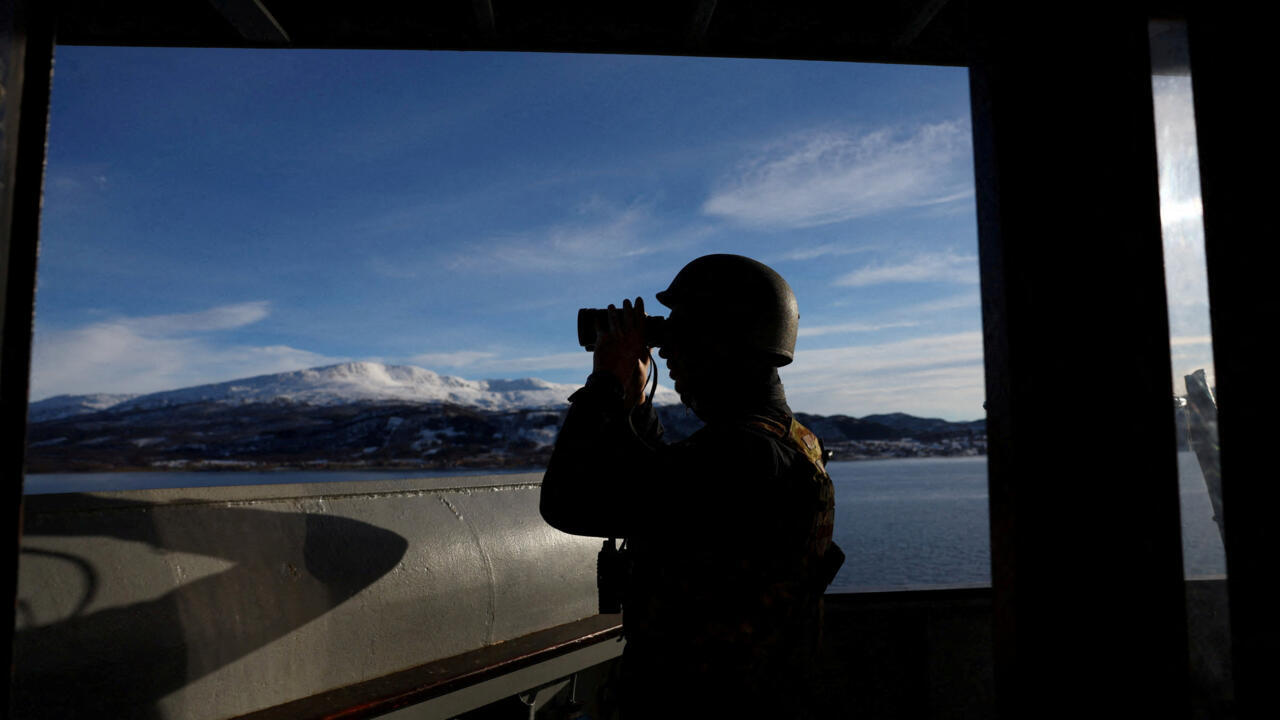
Russia views NATO’s growing activity in the Arctic as a direct security threat, Foreign Minister Sergei Lavrov said on Monday. NATO launched its Arctic Sentry mission in February to strengthen its presence in the region amid tensions with Moscow and US President Donald Trump’s push to acquire Greenland.
Russia sees NATO activity in the Arctic as a direct security threat, Foreign Minister Sergei Lavrov said in an article published on Monday, as the alliance members boost their presence in the region in the wake of Russia's war on Ukraine.

In February, NATO launched a mission called Arctic Sentry to bolster its presence in the far north, underscoring the alliance's increased focus on the Arctic amid tensions with Russia and US President Donald Trump's push for the acquisition of Greenland.
Russia, which has a naval fleet including nuclear-armed submarines in the Arctic, sees the region as its sphere of interest where it also develops a shipping route to connect with the Asian nations.
Moscow has earlier protested the Arctic Sentry mission and in the article, Lavrov, President Vladimir Putin's long standing foreign minister, said Russia sees NATO military exercises in the region as 'aggressive'.
"Such military activity in the Far North poses direct threats to Russia's security. The risks of incidents that could trigger an armed confrontation, with potentially catastrophic consequences, are increasing," he said in the article published by the Russian foreign ministry.
Russia has the largest military presence and the most extensive military infrastructure in the Arctic and in recent years China has started to increase its activity in the mineral-rich area, mostly in partnership with Moscow.
Norway, a Russia's neighbour, this month expanded a recently created military brigade headquartered in the Arctic, the latest move by a NATO nation to boost its defence footprint in the wake of the Ukraine war which Russia started in 2022.
Moscow has previously dismissed allegations that it poses a threat to NATO.
Originally reported by France 24.